Close

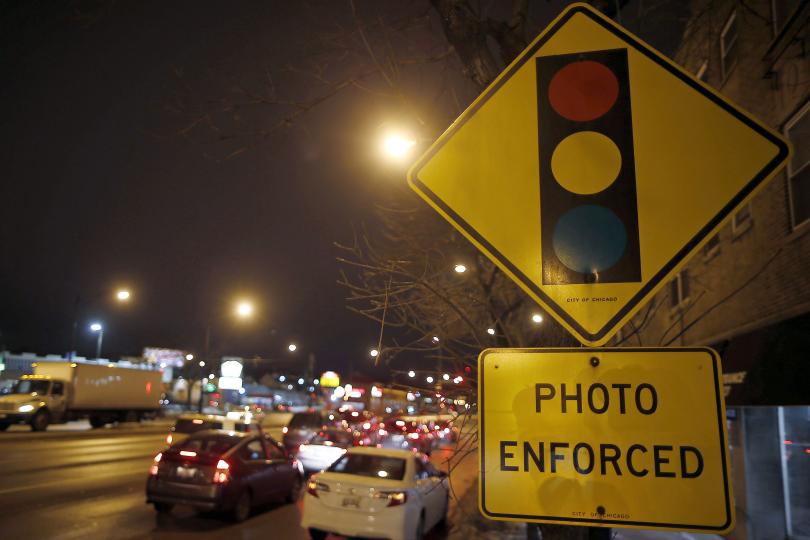
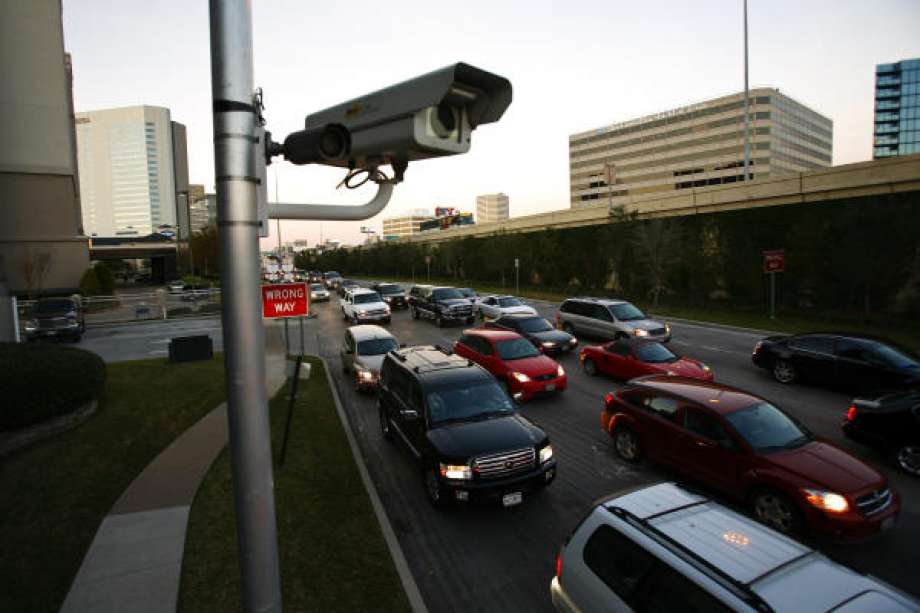
Texas Red Light Camera Citations – Class Action Suit Filed

For those of you that are regular listeners to my radio show on Rule of Law Radio / Logos Radio Network, you have often heard me make mention of all of the very substantial reasons that red light cameras are completely unconstitutional right out of the gate.  And, as noted in one of my other previous posts, they are even more illegal and unconstitutional when implemented via municipal ordinance rather than by state law or statute. I even posted one of my last blog updates with information relating to this very thing in the form of a video and an updated red light camera “kiss my royal individual sovereign ass” response letter.

Today, I have even bigger and better news in that particular arena. And that news revolves around the very highly regarded desire to end the unconstitutional fiasco created by these programs. That desire has finally reached a point of fruition that will hopefully culminate in the long-sought-after removal of these cameras and the injustices that they have wrought upon every person that has ever received one.

That being said, this post contains several documents relating to a class-action lawsuit that has just been filed against a multitude of Texas municipalities for their unconstitutional and downright illegal red light camera citation scams.I would HIGHLY recommend that anyone that has EVER received one of these citations relating to a Texas municipality try and contact the law firm that filed the suit and see if you can be included as a Plaintiff.

Their first amended complaint (attached) was filed in federal court just a few days ago, and it will provide all of the lurid details as to the inner workings and corrupt practices that have been engaged in for more than eight years by some of these municipalities, and slightly fewer years for some of the others, but, each and every one illegal and unconstitutional before they were ever voted upon to be enacted.  This red light camera scam was born and foisted upon the people of Texas back in 2007 by the Texas Legislature in yet another attempt to steal money from the people through unconstitutional legislation (Texas Constitution).

When I first read the complaint, I recognized all of the same arguments that I have been using in my discussions with activist groups on this subject. Many of which are also part of the red light camera chapter in my second upcoming book on the judiciaries intentional denial of legal due process in misdemeanor cases handled in Texas courts. It is noteworthy because the large law firm that has filed the suit on behalf of their client are actually validating all of the arguments I have been making all along by making those same arguments in their complaint. It is noteworthy because it is irrefutable proof that going to law school is NOT a prerequisite to understanding what our constitutions and statutes actually say and mean, nor does it require judicial interpretation by a judge or an attorney to be understandable.

Real law and justice does NOT require specialized training to comprehend, to fight for, or to adjudicate, as long as you are not arguing and ruling based upon some personal or political agenda rather than the actual facts, the circumstances, the law, and the constitutionality of all of the above. It requires only that one have an above average grasp of right and wrong as well as the predominate written and spoken language where the law will be practiced. The false belief in specialized training was originally established, and is being maintained, by the elitist legal fraternity through the various Bar Associations and law firms, who currently have a monopoly on access to the courts, the tools used in the legal industry, and recognition as being one knowledgeable in the law, even when they aren’t.  This is a judicial system that the attorneys and judges have created entirely for themselves, not we the People. It is the Bar that constantly changes the purpose of law, the manner of arguing and filing pleadings, and every other manner of process and procedure meant to make even what was once the simplest of actions into a legal quagmire to the uninitiated layman. There can never be equal justice under the law because the practice and methods of achieving that justice are known and controlled by only a select few.  And all of it is entirely violative of justice and the rights of the people to substantial and substantive due process.

That being said, enjoy the read, because I certainly did!

(OCR’d) RLC Lawsuit – City Attorney Representation Letter

(OCR’d) RLC Lawsuit – Plaintiff’s First Amended Complaint

(OCR’d) RLC Lawsuit – Plaintiff’s Notice of Filing Suit

(OCR’d) RLC Lawsuit – Plaintiff’s Request for Records

(OCR’d) RLC Lawsuit – Plaintiff’s Request Interrogatories

(OCR’d) RLC Lawsuit – Plaintiff’s Standing Order to ATS

No Matter WHAT the Courts Tell You, County and Municipal Ordinances ARE NOT Binding Public Law!!

I am giving away these two chapters of my second book simply because the information in the second attached chapter relating to ordinances is so wide-spread and pervasive in every single Union State.

Please read them carefully and compare what is written to your own sovereign state’s constitution and see if you notice the same irregularities in what your pretend representatives have been doing to you for the last several decades of deceit and betrayal in which they have all engaged at some point or other.

It works very much like the “good cop” problem, there are no “good cops” because they won’t arrest and charge the bad ones out of self-preservation for their own careers.  And no less is true of the politicians you have allowed to occupy your public offices. Even when things are done that violate law, ethics, morality, and the constitutional prohibitions making it unlawful, they do nothing to expose and call out their corrupt fellows to be held publicly accountable.

Screw the ‘thin blue line,’ the ‘code of silence,’ and the ‘chain of command’ if any or all of them require or allow corruption and abuse of power and authority to win the day over right and justice. Don’t any of you dare stand there and call your actions or inactions ‘good’ when you see evil things being perpetrated and do nothing to stop, prevent, or publicly expose it just so you don’t risk losing a paycheck. Nothing is more pathetic and hypocritical than that.

What I have written about here is everything that we are all having to experience and survive in our modern police state and over-regulated society and way of living, and it needs to stop. But only by knowing and educating others can we hope to do that. So please, take the time to read what is contained in the attached document, especially if you are an attorney or personally know one that would appreciate the information (good luck on that one….).

I was asked about how to respond to a notice of some alleged ordinance violation in some city here in Texas, and so I thought I would present an answer for the edification of all, regardless of your state republic. READ your state constitutions and Bill of Rights people! It was put there for a REASON, and only YOU can enforce it for yourself. But first, you have to know what is there and how it ties into the few things that you actually authorized your public servants to do!

==============================================

Ordinances are NOT and CANNOT be enforced as public law in Texas. Check your individual state constitutions on exactly to WHOM the power to create binding public law was delegated. That body CANNOT re-delegate that power unless the state constitution specifically authorizes it to do so, or individually empowers some other office to create binding public law for some specific purpose.

NOWHERE does the Texas Constitution authorize ANY OTHER body to create public law outside of the Texas Legislature. In fact, the term ordinance appears exactly ONCE each in Arts. 9 (counties) and 11 (municipalities). And NEITHER time is it addressed as being LAW or binding upon the public as such.

In fact, any such action would be a direct violation of the Texas Constitution. How do we know this? We READ!!

Within Art. 11, Sec. 5 we find the following “The adoption or amendment of charters is subject to such limitations as may be prescribed by the Legislature, AND NO CHARTER OR ANY ORDINANCE PASSED UNDER SAID CHARTER SHALL CONTAIN ANY PROVISION INCONSISTENT WITH THE CONSTITUTION OF THE STATE, or of the general laws enacted by the Legislature of this State.”

In other words, Art. 11, Sec. 5, Texas Constitution, specifically FORBIDS a municipality from granting themselves the power to MAKE any binding public law. Nor can the legislature delegate such power to them or authorize any such powers through a statutory scheme. This is precisely why I assert that ordinances can be binding upon ONLY those ‘persons’ internally employed by, contracted with, authorized/created by, or that knowingly and willingly consent to being bound by such acts.

In Art. 3, Secs. 1 and 2 we read this:

“Sec. 1. SENATE AND HOUSE OF REPRESENTATIVES. The Legislative power of this State shall be vested in a Senate and House of Representatives, which together shall be styled “The Legislature of the State of Texas.”

Sec. 2. MEMBERSHIP OF SENATE AND HOUSE OF REPRESENTATIVES. The Senate shall consist of thirty-one members. The House of Representatives shall consist of 150 members. ”

Does a city council meet ANY of these criteria as the constitutionally designated public law-making body in Texas? Just in case you’re reading this and are one of those Statist libtards with below average reading and comprehension skills, the definitive answer is FUCK NO, they DO NOT!!

Again, how do we argue that this is the case and make it stick? The same way we did before, we READ!

In Art. 3, Secs. 1 and 2 we read this:

“Sec. 19. INELIGIBILITY OF PERSONS HOLDING OTHER OFFICES. NO judge of any court, Secretary of State, Attorney General, clerk of any court of record, or any PERSON HOLDING A LUCRATIVE OFFICE UNDER the United States, or THIS STATE, or any foreign government SHALL DURING THE TERM FOR WHICH HE IS ELECTED OR APPOINTED, BE ELIGIBLE TO THE LEGISLATURE.”

So, if we paraphrase it down to its essence, we can plainly read:

“Sec. 19. INELIGIBILITY OF PERSONS HOLDING OTHER OFFICES. NO … PERSON HOLDING A LUCRATIVE OFFICE UNDER … THIS STATE, … SHALL DURING THE TERM FOR WHICH HE IS ELECTED OR APPOINTED, BE ELIGIBLE TO THE LEGISLATURE.”

So, if a municipal attorney wants to argue over it, we do it this way:

1) By what form of official mechanism did the members of the [CITY NAME] city council obtain their individual offices?

2) If they are elected to their office, and are allegedly functioning as a political subdivision thereof, i.e. as state actors performing official state acts, then why are you arguing that they are NOT a “PERSON HOLDING A LUCRATIVE OFFICE UNDER … THIS STATE,” and, thus, are ineligible to be sitting in the Texas Legislature at the same time they are sitting as paid members of the city council?

3) Okay, I agree then that they are NOT acting as members of the Legislature nor are they acting under ANY constitutionally delegated state authority when acting solely as members of the [CITY NAME] city council for the purposes of THIS ordinance, therefore, it would be constitutionally impossible for it to have the force and effect of binding public law as that power is delegated ONLY to the Texas Legislature, who CANNOT re-delegate it to someone else through legislation pursuant Art. 1, Sec. 29 of the Texas Constitution within the People’s, meaning MY PERSONAL, Bill of Rights.

Sec. 29. PROVISIONS OF BILL OF RIGHTS EXCEPTED FROM POWERS OF GOVERNMENT; TO FOREVER REMAIN INVIOLATE. To guard against transgressions of the high powers herein delegated, we declare that everything in this “Bill of Rights” is excepted out of the general powers of government, and shall forever remain inviolate, and all laws contrary thereto, or to the following provisions, shall be void.

4) Does the alleged ordinance enactment fully comply and comport with Art. 3, Sec. 29 of the Texas Constitution and remain inviolate of Art. 1, Sec. 29 of the Bill of Rights within same?

Sec. 29. ENACTING CLAUSE OF LAWS. The enacting clause of all laws shall be: “Be it enacted by the Legislature of the State of Texas.”

5) Does the alleged ordinance enactment fully comply and comport with Art. 3, Sec. 30 of the Texas Constitution and remain inviolate of Art. 1, Sec. 29 of the Bill of Rights within same?

Sec. 30. LAWS PASSED BY BILL; AMENDMENTS CHANGING PURPOSE. No law shall be passed, except by bill, and no bill shall be so amended in its passage through either House, as to change its original purpose.

6) Does the alleged ordinance enactment fully comply and comport with Art. 3, Sec. 31 of the Texas Constitution and remain inviolate of Art. 1, Sec. 29 of the Bill of Rights within same?

Sec. 31. ORIGINATION IN EITHER HOUSE; AMENDMENT. Bills may originate in either House, and, when passed by such House, may be amended, altered or rejected by the other.

7) Does the alleged ordinance enactment fully comply and comport with Art. 3, Sec. 32 of the Texas Constitution and remain inviolate of Art. 1, Sec. 29 of the Bill of Rights within same?

Sec. 32. READING ON THREE SEVERAL DAYS; SUSPENSION OF RULE. No bill shall have the force of a law, until it has been read on three several days in each House, and free discussion allowed thereon; but four-fifths of the House, in which the bill may be pending, may suspend this rule, the yeas and nays being taken on the question of suspension, and entered upon the journals.

8) Does the alleged ordinance enactment fully comply and comport with Art. 3, Sec. 33 of the Texas Constitution and remain inviolate of Art. 1, Sec. 29 of the Bill of Rights within same?

Sec. 33. REVENUE BILLS. All bills for raising revenue shall originate in the House of Representatives.

9) Does the alleged ordinance enactment fully comply and comport with Art. 3, Sec. 34 of the Texas Constitution and remain inviolate of Art. 1, Sec. 29 of the Bill of Rights within same?

Sec. 34. DEFEATED BILLS AND RESOLUTIONS. After a bill has been considered and defeated by either House of the Legislature, no bill containing the same substance, shall be passed into a law during the same session. After a resolution has been acted on and defeated, no resolution containing the same substance, shall be considered at the same session.

10) Does the alleged ordinance enactment fully comply and comport with Art. 3, Sec. 35 of the Texas Constitution and remain inviolate of Art. 1, Sec. 29 of the Bill of Rights within same?

Sec. 35. SUBJECTS AND TITLES OF BILLS.
(a) No bill, (except general appropriation bills, which may embrace the various subjects and accounts, for and on account of which moneys are appropriated) shall contain more than one subject.
(b) The rules of procedure of each house shall require that the subject of each bill be expressed in its title in a manner that gives the legislature and the public reasonable notice of that subject. The legislature is solely responsible for determining compliance with the rule.
(c) A law, including a law enacted before the effective date of this subsection, may not be held void on the basis of an insufficient title.

11) Does the alleged ordinance enactment fully comply and comport with Art. 3, Sec. 36 of the Texas Constitution and remain inviolate of Art. 1, Sec. 29 of the Bill of Rights within same?

Sec. 36. REVIVAL OR AMENDMENT BY REFERENCE; RE-ENACTMENT AND PUBLICATION AT LENGTH. No law shall be revived or amended by reference to its title; but in such case the act revived, or the section or sections amended, shall be re-enacted and published at length.

12) Does the alleged ordinance enactment fully comply and comport with Art. 3, Sec. 37 of the Texas Constitution and remain inviolate of Art. 1, Sec. 29 of the Bill of Rights within same?

Sec. 37. REFERENCE TO COMMITTEE AND REPORT. No bill shall be considered, unless it has been first referred to a committee and reported thereon, and no bill shall be passed which has not been presented and referred to and reported from a committee at least three days before the final adjournment of the Legislature.

13) Does the alleged ordinance enactment fully comply and comport with Art. 3, Sec. 38 of the Texas Constitution and remain inviolate of Art. 1, Sec. 29 of the Bill of Rights within same?

Sec. 38. SIGNING BILLS AND JOINT RESOLUTIONS; ENTRY ON JOURNALS. The presiding officer of each House shall, in the presence of the House over which he presides, sign all bills and joint resolutions passed by the Legislature, after their titles have been publicly read before signing; and the fact of signing shall be entered on the journals.

So, Mr./Ms. City Attorney, if I understand your position correctly, the city ordinance that you are attempting to subject me to in my private capacity, as one of the People of Texas, being fully protected from illegal and unconstitutional actions by my public servants in violation thereof, was not and is not in any way compliant with a single provision of any section of Art. 3, Secs. 29-38 of the Texas Constitution in order to have ANY force and effect of law pursuant Art. 3, Sec. 32 of same. Is THAT your position on this matter? If so, then I am forced to challenge your ordinance in federal court on grounds of knowing and willful violations of innumerable state and federal constitutional protections while acting under color of lawful authority as a political subdivision of the state.

Now, Mr./Ms. City Attorney, here’s your napkin, and please tell me how you would like to eat this shit pie you cooked up, one slice at a time or by me shoving the whole thing right down your throat?


__ General Notes on Ordinances Are Not Binding Public Law

General Notes on Failure to Maintain Financial Responsibility

MEME - DPS Says - if Eddie is right 01

Okay, the ‘hyper down-and-dirty’ version of this issue is this. State law does NOT authorize the stopping, detaining, arresting or impounding of persons or cars for lack of registration, a driver’s license, or for lack of proof of/actual financial responsibility. The “Registration” chapter is Chapter 502, the “Driver’s License” chapter is Chapter 521, and the “Financial Responsibility Act” is codified in Texas “Transportation” Code Chapter 601.

The statutory authority for ANY “authorized” officer to make a WARRANTLESS arrest relating to a “transportation” ‘offense’ is found in Sec. 543.001, “Transportation” Code. The warrantless arrest power given is specially and specifically limited by Sec. 543.001 to ONLY those offenses specifically codified “in this subtitle,” meaning Subtitle C of the “Transportation” Code. When you look, you can easily see that Subtitle C encompasses “Transportation” Code Chapters 541 – 600 inclusive. Everything in Subtitle C, other than Chapter 548 Compulsory Inspections, are either moving or mechanical ‘offenses.’

Notice that the “Registration,” “Driver’s License,” AND “Financial Responsibility Act” chapters ALL fall OUTSIDE of the aforementioned chapters legislatively authorizing warrantless arrest.

The prosecutor and/or the judge WILL try to argue that the officer IS authorized to perform a warrantless arrest for such ‘offenses’ under the provisions of Art. 14.01(b), Texas Code of Criminal Procedure.  The problem with that assertion and foundational argument is that it runs head-first into the judicial rules of statutory construction that the courts themselves have developed.

One of the primary points of these rules is this, where a statute within a particular code creates a local and specific element or condition to some subject matter controlled by that code, that code’s local provision supersedes and controls over ANY general statute dealing with the same subject matter, unless the local provision specifically states that the general provision will control.

Well, Art. 14.01(b) of the Code of Criminal Procedure IS a general statute, while the provisions of Sec. 543.001 are local and specific to the “Transportation” Code and makes no mention of Art. 14.01 as being controlling in that instance. Therefore, the rules of statutory construction automatically limit the applicability of any law enforcement officer’s GENERAL authorization to make warrantless arrests under Art. 14.01(b) to those ‘offenses’ that are NOT related to the Texas “Transportation” code.

In this particular case, the “same subject matter” IS the statutory authority to perform a warrantless arrest for an ‘offense’ allegedly committed in the arresting officer’s “presence or view.” Therefore, the argument is that that “Transportation” Code’s local and specific provision controls over the Code of Criminal Procedure’s general provision in this instance, limiting the officer’s power of warrantless arrest to ONLY those ‘offenses’ found in Subtitle C of same.

This would tend to work the same way with the towing thing.  No authorization exists in statute to tow the car, just as there exists no authorization to perform a “transportation” stop in relation to a license plate scan or computer retrieval that comes back saying “no insurance.” This ALSO becomes an issue because, under Texas case law, the information that comes back to the officers on their cruiser computer is HEARSAY in a court of law, and it is INADMISSIBLE if properly challenged. Therefore, the computer information alone CANNOT be the basis for a seizure any more than it can be for a warrantless arrest. The city is deemed to know and understand this fact, and is opening themselves up to a major law suit for doing it in the first place.

Finally, there is the issue of Sec. 601.053, “Transportation” Code, in relation to the ‘offense’ of “Failure to Maintain Financial Responsibility,” and that is that it’s completely repugnant to the right of due process, making it UNCONSTITUTIONAL.  The statute does three very unlawful things in relation to the right of due process. It unlawfully requires production of potentially incriminating information to an officer, it reverses the burden of proof, taking it from the shoulders of the State and shifting it to the back of the accused, and it makes a presumption of guilt over innocence if the accused fails to provide actual evidence that s/he is NOT guilty.  Consider the language it uses by reading just the underlined parts of the statute:

Sec. 601.053.  EVIDENCE OF FINANCIAL RESPONSIBILITY. 

(a)  As a condition of operating in this state a motor vehicle to which Section 601.051 applies, the operator of the vehicle on request shall provide to a peace officer, as defined by Article 2.12, Code of Criminal Procedure, or a person involved in an accident with the operator evidence of financial responsibility by exhibiting:

(b)  Except as provided by Subsection (c), an operator who does not exhibit evidence of financial responsibility under Subsection (a) is presumed to have operated the vehicle in violation of Section 601.051.

(c)  Subsection (b) does not apply if the peace officer determines through use of the verification program established under Subchapter N that financial responsibility has been established for the vehicle.  If a peace officer has access to the verification program, the officer may not issue a citation for a violation of Section 601.051 unless the officer attempts to verify through the program that financial responsibility has been established for the vehicle and is unable to make that verification.

Acts 1995, 74th Leg., ch. 165, Sec. 1, eff. Sept. 1, 1995.  Amended by Acts 1997, 75th Leg., ch. 1423, Sec. 18.06, eff. Sept. 1, 1997.

Amended by:

Acts 2009, 81st Leg., R.S., Ch. 1146 (H.B. 2730), Sec. 15A.01, eff. September 1, 2009.

Acts 2013, 83rd Leg., R.S., Ch. 153 (S.B. 181), Sec. 1, eff. May 24, 2013.

Subsections (a) and (b) are responsible for the primary and readily evident due process violations previously mentioned. And you can see that subsection (c) also has issues with violating due process through lack of probable cause, as it does not take into consideration the possibility of the system not having accurate and up-to-date information, even if the officer does have access and gets back bad info, which they very often do. Nor does it make any exception that denies the officer the ability to issue a citation if s/he does NOT have access to the verification system.

This act and its related statutes are just constitutionally reprehensible all the way-round in the denying and destroying of due process and probable cause, along with the rights of the accused to both, by its blatant attempt to ignore or destroy them altogether.


MEME - Einstein - Dumb Motherfuckers


Texas court opinions ruling that information from computer systems is HEARSAY if the information was input by other persons and not internally formulated and produced by the computer directly.

Computer Data is Hearsay

TEXAS ONLY!! Updated Red Light Camera Response Letter

Okay, here is an updated Red Light Camera Ticket letter that is to be used by TEXANS ONLY for any such “citation” issued by a municipality therein.  Be aware that they might very well go ahead and find against you on the “citation” anyway, but, THAT will be their undoing if you pursue a lawsuit for them having done so. There is also a video of one of the Texas Legislators asking this very fact question of the three-person panel asking them not to pass legislation to do away with the cameras.

It should come as no surprise that this panel was comprised almost entirely of high-ranking law enforcement agency personnel.

https://www.youtube.com/watch?v=v5bRwCeGTzg&feature=youtu.be

Read and ENJOY!!

05.03D2 EC – LTR – (TEXAS ONLY) Special Appearance Letter Red Light or Speeding Camera

The Temporary Home of Tao of Law

To all those that are following me on Facebook, I would like to invite you to follow my blog here on WordPress until the full Tao of Law web site is finished and launched.

I will be doing most of my actual posting here and linking it into Facebook. It is my hope that the text editor here will provide me with a more palatable means of formatting text and, thus, communicating with all of you.

Thank you for the Facebook and radio show following and I hope that I can continue to put out something worth reading and hearing.